PHILANTHROPY AND PHILODENDRONS
The Basics: Vegetative Morphology
The majority of plants consist of only five basic organs: stems, leaves, roots, flowers, and fruits. Only three of these organs-the stems, leaves, and roots- constitute the vegetative organs of a plant.
With that being said, each of these organs can exhibit great diversity.
When looking at a typical plant stem, any botanist or plant lover is going to want to be able to identify the nodes and internodes.
As Figure 1 shows, a node is the segment on the stem at which leaves, roots, and even branching stems grow out of. In the photo, there are two leaves coming out of the labelled node. There are also three more nodes shown in this picture above the labelled one.
Internode
Node
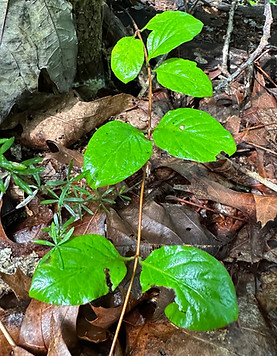
Figure 1: Unknown ID plant- photo taken in Shawnee National Forest, IL
These nodes are particularly important because they contain undifferentiated cells called stem cells. Stem cells maintain the ability to differentiate and become any kind of plant organ/tissue necessary for the survival and expansion of the plant. A plant's shoots (also called growth tips) have this same ability.
The internodes are the parts of the stem in between the nodes. Internodes have differentiated cells which make up the outer 'skin-like' layers of the plant, the structural cells inside, and the cells that act as pathways for water and sugar transport. Although the nodes still have these kinds of cells, they have the added benefit of the undifferentiated cells. Nodes also tend to take up less space throughout the stem in comparison to the internodes.
Vertical Growth Habit

Figure 2: New York City patio houseplant - ID unknown.

Bulb
Stems and the nodes and internodes that constitute them can come in many different shapes and sizes.
Most people are familiar with stems that continually grow upward throughout a plant's life span. This growth habit is found in most dicots, such as the plant shown in Figure 2. This adaptation allows the plant to continually reach closer and closer to the sun.
Growing as a bulb is another popular strategy in plants. This characteristic is commonly seen in monocots, such as the Allium cepa shown in Figure 3. Amorphophallus and other genera such as Musa and Colchicum seem like they have bulbs, but actually have what is called a 'corm.' This corm looks like a bulb but is even more stem than bulbs are. Figure 4 provides an example of an Amorphophallus titanum corm.
This is because bulbs do technically have a stem, but it is only at the very bottom of the bulb. Most of it is actually leaves that have adapted to grow in a corm-like or spherical form.
Nonetheless, bulbs and corms serve the same purposes. Both of these structures save water and nutrients underground, allowing the plants to store up energy for their seasonal dormancy.
Figure 3: Part of the Allium cepa (red onion) harvest from Sylvester Manor Educational Farm, 2023.
Stems are also capable of acting as above ground storage systems. Something to note is that plants adapted to temperate regions tend to have bulbs or corms as storage organs, which allow them to retain heat due to the higher temperatures underground. Meanwhile, plants with above ground storage systems like many cacti and euphorbias (Figures 5 and 6 below) have adapted to hot arid regions. This prevents the ground from overheating the storage organ and evaporating all of the water from it.
However, this is not a strict rule. One primary example are caudiciforms, which stray from this trend by existing as desert-adapted plants with underground storage organs. This could be due to the fact that caudiciforms like Dioscorea elephantipes (Figures 7 and 8 below) have

Node the leaf grows from
Corm (stem)
Roots
Figure 4: Corm of an Amorphophallus titanum waiting to be repotted at the UC Davis Botanical Conservatory.
deep ridges in the caudex which direct rainwater to the base of the plant and into the ground. As for plants like Lophophora williamsii (no photo available), it seems to me that the compact substrate around them prevents any air from seeping in and heating up it up. Therefore, the substrate retains its cold temperature and actually keeps the plant cool.

Areole: node at which spines grow from
Node at which spines and new stems grow from
Spines
Figure 5: Opuntia sp. in the UC Davis Arboretum.
One unusual aspect of vegetative growth in cacti is the nature of their nodal growth. They have nodes that distinguish each segment, or pad, between the next. These nodes are prominent because they maintain the ability to produce new segments of stem.
However, they have another kind of node called an "areole." Areoles are the nodes on cactus pads or segments that produce spines.
On the topic of spines, perhaps we should consider how to distinguish them from thorns and prickles. Outside of the scientific context, these three words are often used synonymously. Nonetheless, they do have specific meaning. Spines are technically modified leaves, and the Opuntia species shown in Figure 5 exhibits these, as well as Figures 10 and 11 below.
Thorns, on the other hand, are a kind of modified stem. To tell the difference between thorns and spines, it is necessary to look at their placement in reference to the

Stem/Storage Organ
Figure 6: Euphorbia tirucalli at the Chicago Botanic Garden.


Figures 7 + 8: Dioscorea elephantipes at the UC Davis Botanical Conservatory (potted) and the Royal Botanic Gardens, Kew (in-ground).
subtending leaf (the leaf next to or paired with the spine or thorn). Both the leaf and the pointed structure should protrude from the same node. When level with the node, look to see if the leaf is above the pointed structure. If so, this means the structure is a spine.
If the leaf is below the pointed structure, the structure is then a thorn, as shown in Figure 9. This makes sense because a thorn is simply a modified stem, and it is very common to see a leaf sitting just below an axillary shoot. As for spines, the subtending leaf is not actually a leaf, but a new shoot called an axillary bud. This axillary bud will give rise to an axillary shoot.
The third option that has yet to be discussed are prickles, which can be found in Figures 10 and 11. Prickles are neither stems or leaves, they are actually extensions of the epidermis. The epidermis is kind of like the "skin" on a plant's stems and leaves--check out the Histology pages to better understand what an epidermis is. If a plant's leaves have spiky outgrowths like those in Figure 11, it is important not to mistake these for prickles. When the outgrowths are on the leaves, they are classified as spines because a spine is defined as both an entirely modified leaf and a part of a leaf that has been modified.
It is typically easiest to spot prickles on a plant because they are usually more dense on the stem than spines or thorns. They also have a less regular pattern on the stem because they are not restricted to the nodes. On roses like the one seen in Figure 12, the prickles tend to protrude at a gradual incline while spines and thorns protrude directly outward.
Thorn

Figure 9: Bougainvillea sp. at the UC Davis Botanical Conservatory

Figure 10: Ribes californicum in the UC Davis Arboretum

Figure 11: Solanum pyracanthos at the UC Davis Botanical Conservatory
Spine
Prickles
Spine
Figure 12:
Rosa cultivar in Davis, CA
Spines are not the only way leaves have become modified. First, though, it is necessary to understand what defines a leaf. As previously discussed, leaves are grown from the nodes. They are plant organs that have determinate growth, meaning that at maturity, all of the cells in the leaf have differentiated and the leaf is unable to grow any further, similar to how humans grow. In the end, older leaves often die off as new leaves grow because they are blocked from the sunlight and no longer serve a purpose.
Botanically, some of the main terms used to describe leaves include simple, compound, palmate, and pinnate. The most well-known leaf type would be a simple leaf, like the one shown in Figure 13. This leaf exhibits the three main parts: the blade, the petiole, and the midrib. The midrib is the central vein out of which all other leaf veins come from. The petiole is the part of the leaf connecting the blade to the stem. These main parts are typically found in leaves, but that is not always true.
Simple leaves can be shaped differently, but the key element of a simple leaf is that it lacks petiole-like segments that would divide the leaf into multiple leaflets, as seen in Figure 14. Instead, Figure 14 shows a compound leaf, which are sometimes difficult to identify because each leaflet looks like an entire leaf. Additionally, the segment connecting all of the leaflets, called the rachis, looks to be an axillary shoot (stem).
The best way to determine whether a portion of a plant is a compound leaf or a stem with multiple simple leaves is by inspecting the rachis or stem for nodes with axillary buds. If it has nodes and axillary buds, it is a stem with simple leaves. If it only has leaflets or leaves coming off it, it is the rachis of a compound leaf.
A more confusing aspect of leaf morphology is the usage of palmate and pinnate to describe leaves. What makes the usage of these terms difficult to understand is the fact that these terms can be used to describe both simple and compound leaves. This is because simple leaves still often exhibit lobes, so they are not completely divided like compound leaves but they do have a palmate or pinnate shape. Figure 15 is an example of a palmate simple leaf, and Figure 16 is an example of a pinnate simple leaf. As previously noted, compound leaves can also be pinnate or palmate. Figures 17 and 18 exhibit the compound versions of these growth forms.
The words used to describe leaf morphology are endless, but some other examples of popular terminologyused to describe leaf shape are peltate, dissected, and cordate. Peltate is used to describe leaves with leaf blades that are connected to the petiole at the center of the blade, and the blade and petiole are perpendicular to one another. Pilea peperomioides is a common houseplant with peltate leaves, seen in Figure 19. Dissected leaves have highly lobed leaf blades, like those seen in Eschscholzia californica or the Delphinium hesperium subspecies hesperium in Figure 20. Cordate is really just the fancy word for heart shaped leaves, like those of Asarum lemmonii in Figure 21 or the Dioscorea elephantipes in Figure 7.
Figure 13: Asclepias sp. in Nevada County, CA
Figure 17: Aesculus californica in Pinnacles National Park
Figure 18: Pistacia chinensis in Davis, CA
Figure 16: Quercus sp. on UC Davis campus
Figure 15: Acer palmatum at Tower Cafe in Sacramento


Figure 14: Juglans hindsii at Ruhstaller Farm

Figure 19: Pilea peperomioides houseplant
Figure 20:
Figure 21: Asarum lemmonii in Nevada County, CA


Simple Leaf
Compound Leaf
Leaflet
PalmateSimple Leaf
PinnateSimple Leaf
Palmate Compound Leaf
Pinnate Compound Leaf
Leaf coloration is another element of leaf morphology that varies drastically. Some of the plants that are known for their interesting vegetative coloration include Amorphophallus atroviridis (Figure 22), Begonia maculata (Figure 23),
and Elaphoglossum metallicum (Figure 24).
Amorphophallus atroviridis has dark gray-green leaves outlined in pink, making it a popular houseplant. This leaf coloring is natural, and supposedly has evolved as camouflage against the limestone rock it grows natively on. Some of the photos on iNaturalist demonstrate this camouflage, especially when the plant is in sunlight.
However, I do not entirely understand why the pink only outlines the leaf blade rather than the entire leaf blade being mottled with pink. This could be explained by taking a look at Ludisia discolor, which has a wider distribution than A. atroviridis but seems to have a somewhat similar habitat and leaf coloration.
L. discolor is thought by some to have adapted dark leaves with pink venation to accumulate light. As an understory plant, this orchid does not get a lot of light. The dark leaves, popular in many understory plants, are caused by the anthocyanin inside them. The pink venation is thought by some to reflect even more light towards the leaves, though I have yet to find a research paper to support this. If this is true, then I think it is likely that A. atroviridis is using the same mechanism.
Begonia maculata, too, has leaf coloration that optimizes light intake, though it does so in a different way. Instead of colorful venation or outlining, it has silver polka dots.
The roots of the plant are the final element of vegetative morphology that is necessary to cover.
Two of the more notable kinds of root growth strategies include the tap root system and the fibrous root system.
The tap root system is a growth strategy that aims to put most of the plant's root-directed energy into a singular root so it can grow deep into the ground to access water. The tap root also allows the plants to store carbohydrates like sugars and starches, along with it keeping the plant secured in the ground. This strategy is found in Daucus carota, Taraxacum officinale, Welwitschia mirabilis, and so many more.
The fibrous root system is the mechanism in which a plant divides its energy evenly among roots, lacking any one central root. This mechanism is most often found in plants native to habitats with nutrient and water rich substrate. This root system is more common, but just a few examples are Sequoia sempervirens, epiphytic orchids, and begonias.